
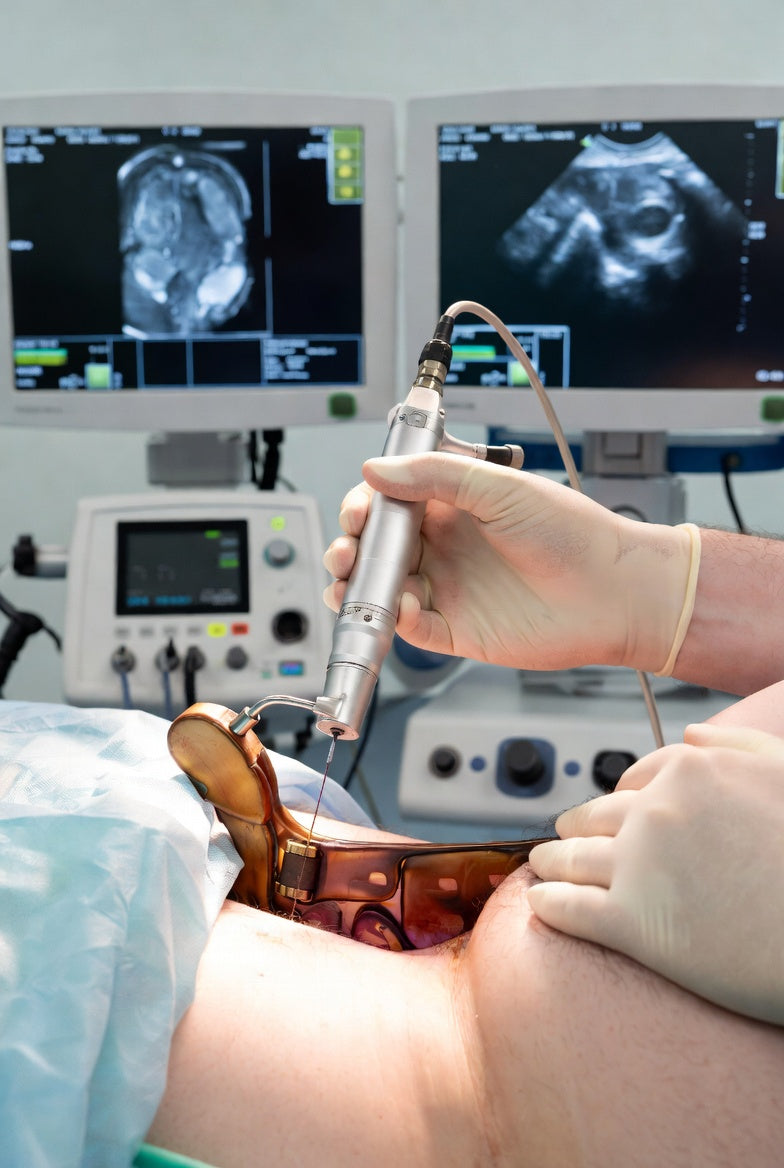
Breakthrough in Prostate Cancer Treatment: ProFocal Laser Therapy Shows Promising Results in Pivotal Trial
In a significant development for minimally invasive cancer care, a novel laser-based focal therapy device has demonstrated encouraging outcomes in its first pivotal clinical trial for treating localized prostate cancer. The ProFocal Laser Therapy for Prostate Tissue Ablation (PFLT-PC) trial, published in BJU International in late January 2026, highlights the potential of ProFocal®, a cooled laser system designed to precisely target and ablate cancerous prostate tissue while sparing healthy surrounding areas.
The Challenge of Traditional Prostate Cancer Treatments
Prostate cancer remains one of the most common cancers in men worldwide. Conventional treatments like radical prostatectomy or whole-gland radiation often come with substantial side effects, including urinary incontinence, erectile dysfunction, and reduced quality of life. Focal therapies aim to address this by treating only the diseased portion of the prostate, preserving function in unaffected areas. However, many existing focal options have limitations in precision, heat management, or consistent ablation depth.
How ProFocal® Works
ProFocal® employs a specially designed, cooled laser fiber that delivers targeted energy to ablate prostate tumors with high precision. Cooling mechanisms help protect adjacent tissues and reduce thermal damage. The procedure is minimally invasive, typically performed under imaging guidance, allowing real-time monitoring for accuracy. This approach aligns with the growing trend toward personalized, organ-sparing interventions in oncology.
Key trial findings include:
- Effective tumor ablation in a high percentage of treated patients.
- Favorable safety profile with lower rates of severe side effects compared to whole-gland treatments.
- Promising early indicators of cancer control without compromising urinary or sexual function.
While longer-term follow-up is needed, these results position ProFocal® as a potential game-changer for patients with intermediate-risk, localized disease who seek alternatives to more aggressive therapies.
Broader Context in Laser Healthcare (2026)
This advancement fits into a larger wave of laser innovations transforming healthcare in 2026. From AI-enhanced refractive surgery (e.g., WaveLight® Plus with ray-tracing customization) to next-generation skin resurfacing systems like UltraClear™ with Laser-Coring™ technology, lasers are delivering greater precision, faster recovery, and expanded accessibility. In dermatology, aesthetics, ophthalmology, and now oncology, cooled and hybrid laser platforms are reducing downtime and improving outcomes across specialties.
Experts anticipate that focal laser therapies could expand to other cancers and conditions, driven by integration with advanced imaging and robotics for even greater accuracy.
Implications for Patients and Providers
For patients, this means hope for effective cancer control with fewer life-altering complications. Clinics adopting such technologies may see increased demand for outpatient or short-stay procedures. As regulatory approvals progress and more data emerges, ProFocal® and similar systems could become standard options in multidisciplinary prostate cancer care.
This development underscores lasers' expanding role beyond traditional applications like vision correction and skin rejuvenation into high-stakes interventional oncology. Stay tuned for follow-up studies that could confirm long-term efficacy and broaden eligibility criteria.