
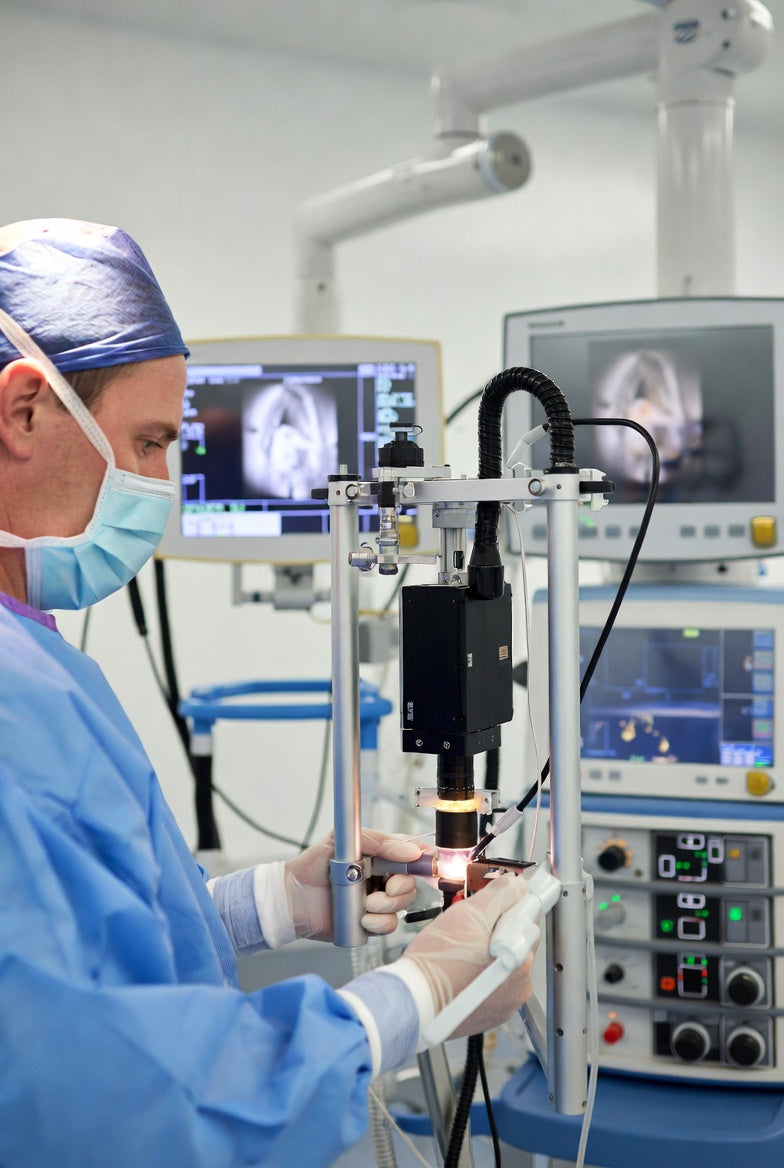
Expanded Applications of Lasers in Surgery and Therapy
Lasers are rapidly expanding beyond traditional roles in ophthalmology and dermatology, becoming essential tools in complex surgical procedures and therapeutic interventions. In 2026, innovations in precision, depth control, and tissue preservation are opening new frontiers in orthopedic surgery, oncology, neurosurgery, and pain management.
Breakthroughs in Laser Bone Surgery
One of the most notable advancements this year comes from researchers at the University of Basel. In early 2026, they demonstrated a refined laser beam profile — known as a "top-hat" distribution — that enables significantly deeper and faster bone cutting than previous systems. Traditional Gaussian laser beams typically achieved depths of around 2.6 cm in bone, but the new approach reached up to 4.5 cm with improved efficiency and reduced thermal damage to surrounding tissues.
This development has major implications for orthopedic and craniofacial procedures. Robot-guided laser systems can now create complex, patient-specific cutting trajectories that were difficult or impossible with mechanical tools. Surgeons anticipate shorter recovery times, less invasive approaches, and greater precision in procedures like joint replacements or tumor resections involving bone.
Focal Laser Therapy in Oncology
In urologic oncology, cooled laser focal therapy is gaining momentum for localized prostate cancer. The ProFocal® system, which uses a cooled laser fiber for precise tumor ablation under imaging guidance, showed promising results in its pivotal Phase 2 trial published in January 2026. The technology effectively targets cancerous tissue while sparing healthy prostate areas, resulting in strong early cancer control rates and favorable preservation of urinary and sexual function compared to whole-gland treatments.
Focal laser ablation continues to evolve with MRI guidance, allowing real-time monitoring and customization. Similar laser-based focal approaches are being explored for other soft-tissue cancers, driven by the demand for minimally invasive options that reduce side effects.
Advancements in Ophthalmic and Neurosurgical Applications
Laser technology in eye surgery remains a leader in innovation. New techniques like Direct Selective Laser Trabeculoplasty (DSLT) offer lens-free, automated treatments for glaucoma, improving intraocular pressure control with minimal contact. Femtosecond laser systems are also advancing trabeculotomy procedures, creating precise drainage channels without incisions.
Looking further ahead, researchers in Scotland are adapting ultrashort-pulsed deep-UV lasers — similar to those used in refractive eye surgery — for potential neurosurgical applications. These systems can remove soft tissue with extraordinary precision (slices as thin as 10 micrometers), raising hopes for more accurate tumor removal with reduced collateral damage in delicate brain and spinal procedures.
Therapeutic Lasers in Pain Management and Healing
Beyond cutting and ablation, high-power and low-level laser therapies (photobiomodulation) are expanding in rehabilitation and chronic pain management. Multi-wavelength platforms deliver targeted energy to stimulate cellular repair, reduce inflammation, and alleviate musculoskeletal pain. These non-invasive treatments are increasingly integrated into sports medicine, physical therapy, and post-surgical recovery protocols, offering opioid-sparing alternatives.
The Broader Impact
These expanded applications reflect lasers' growing versatility: combining with robotics, AI, and advanced imaging for smarter, safer interventions. Challenges remain — including the need for larger long-term studies and specialized training — but the trajectory is clear. As highlighted at the ASLMS 2026 Annual Conference, lasers are transitioning from supportive tools to primary modalities in many surgical and therapeutic settings.
The result is a shift toward precision medicine: less trauma, faster healing, and better functional outcomes for patients across specialties. Expect continued growth in hybrid systems and broader regulatory approvals as 2026 progresses.