
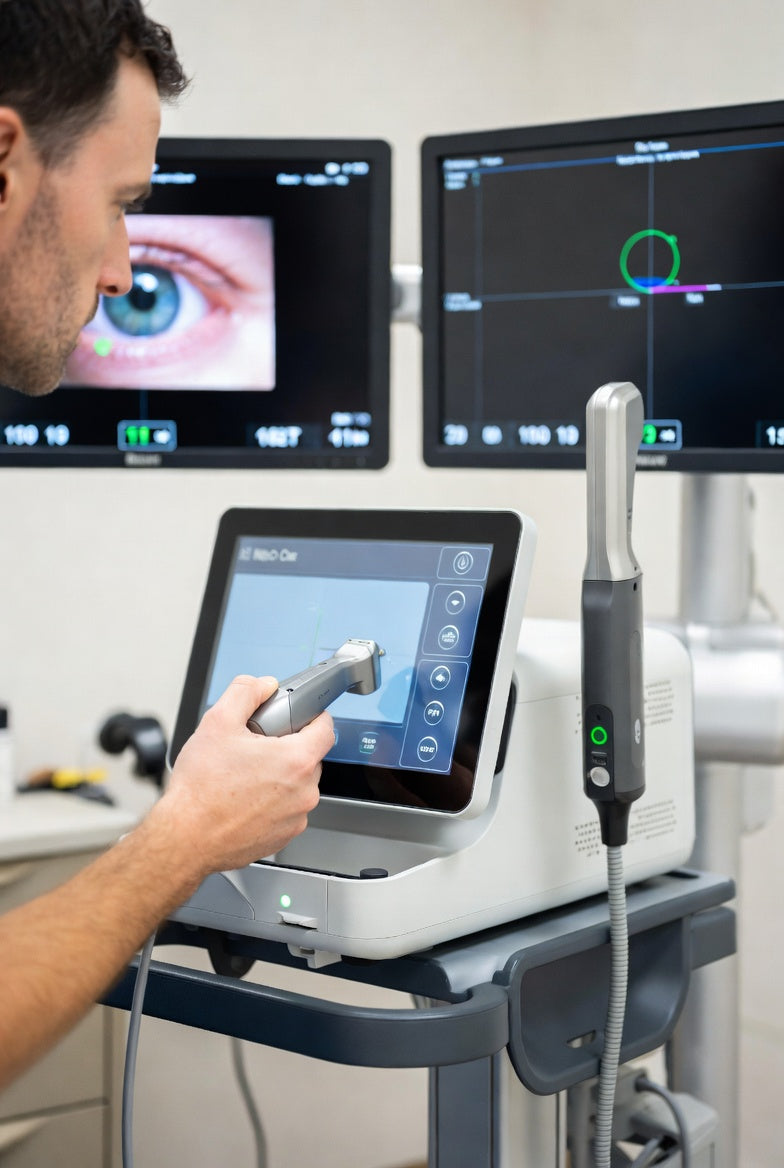
Breakthrough in Glaucoma Treatment: Direct Selective Laser Trabeculoplasty (DSLT) Emerges as Game-Changer in 2026
In a notable advancement for glaucoma management, Direct Selective Laser Trabeculoplasty (DSLT) is gaining significant traction as a simplified, non-invasive laser procedure that lowers intraocular pressure (IOP) with minimal patient discomfort and reduced operator skill requirements. Early 2026 clinical data and real-world adoption reports highlight DSLT’s potential to shift laser therapy earlier in the treatment paradigm for open-angle glaucoma.
The Challenge of Traditional Glaucoma Treatments
Glaucoma remains a leading cause of irreversible blindness worldwide. Traditional management often begins with daily eye drops, which suffer from poor patient adherence. Selective Laser Trabeculoplasty (SLT) has been an effective alternative, but it typically requires a skilled operator using a contact gonioscopy lens to visualize and treat the trabecular meshwork. This creates barriers to widespread use, including the need for specialized training and patient discomfort from lens contact. More invasive surgical options carry higher risks of complications.
How DSLT Works
DSLT represents a next-generation, lens-free approach to laser trabeculoplasty. The system uses automated, translimbal delivery to apply laser energy directly through the sclera, precisely targeting the trabecular meshwork without requiring direct visualization via a contact lens. The procedure is fast — often completing 100 spots in seconds — and can be performed in an office setting with the patient seated upright. Real-time guidance and automation improve consistency and safety.
Key advantages include:
- No contact lens required, improving patient comfort.
- Reduced technical skill barrier for practitioners.
- Repeatable treatment with a favorable safety profile.
Key Findings from 2026 Data
Early 2026 reports and ongoing trials show promising outcomes, including meaningful IOP reductions and decreased reliance on medications. Clinicians note high patient tolerability and the ability to integrate DSLT more readily into routine practice. Compared to conventional SLT, the simplified delivery may expand access to effective laser therapy for a broader range of ophthalmology providers and patients.
Broader Context in Laser Healthcare
This advancement aligns with the continued evolution of precision laser technologies in ophthalmology. From femtosecond lasers in cataract surgery to AI-enhanced refractive platforms, 2026 is seeing lasers deliver greater automation, predictability, and minimal invasiveness across eye care. Similar trends appear in other fields, such as improved focal therapies in oncology and deeper bone-cutting lasers in orthopedics.
Implications for Patients and Providers
For patients, DSLT offers a comfortable, effective option that can delay or reduce the need for daily drops or more invasive surgery. For clinics and manufacturers, the lower skill barrier and office-based nature could drive higher adoption rates and procedural volume. As longer-term data matures and regulatory pathways advance, DSLT and similar automated laser systems are positioned to become standard first-line or early intervention tools in glaucoma management.
This development reinforces lasers’ expanding role as precise, patient-friendly solutions in chronic disease management. Further studies in 2026 and beyond will help define optimal patient selection and long-term durability.