
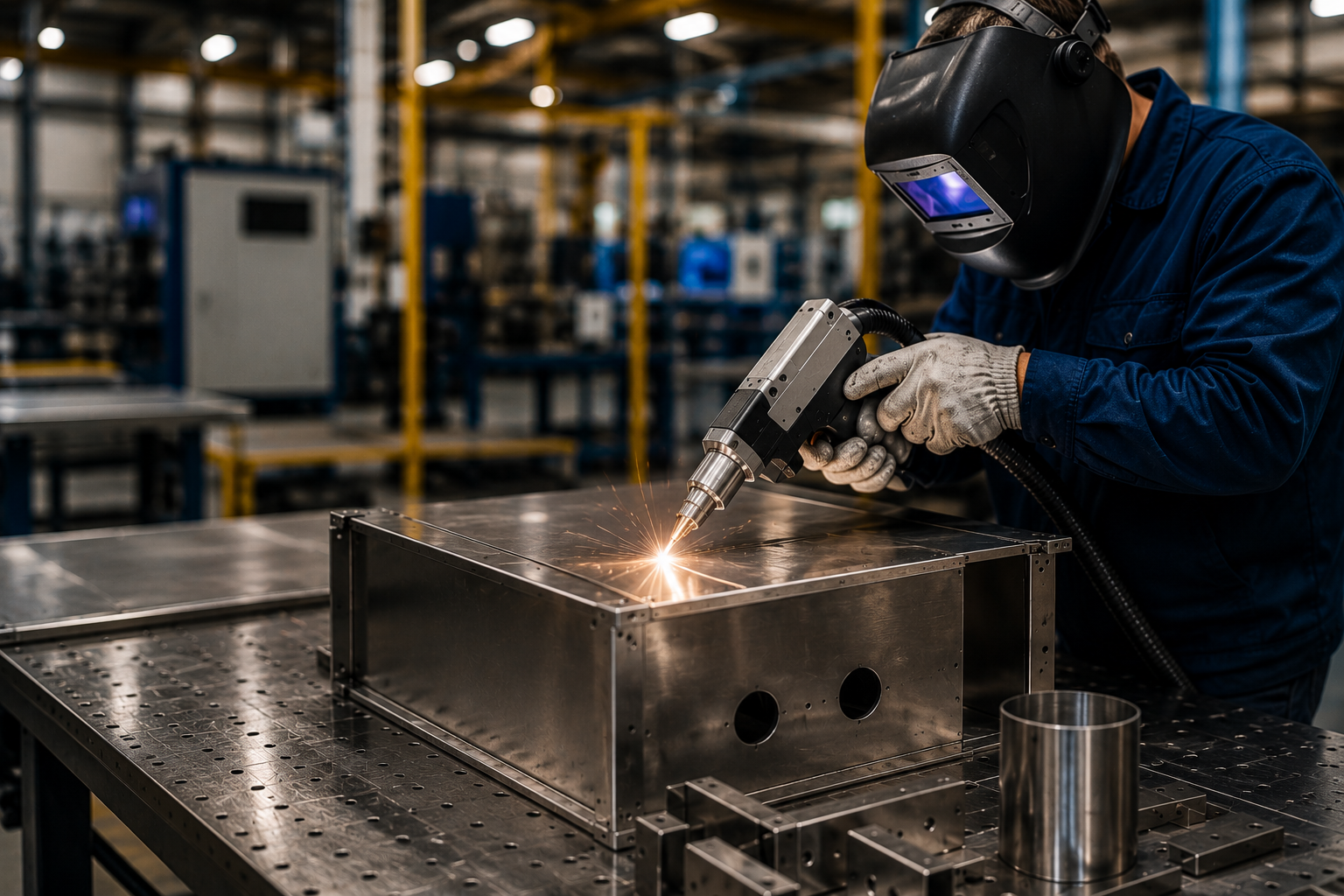
Industry Update: New Handheld Laser Welder Hitting the Market
Han's Laser just rolled out the latest iteration of its Blue Crystal Series handheld fiber laser welding systems in early June 2026. The new A75 and A95 models build on last year's release with higher power options, improved ergonomics, and better multi-process capabilities. This feels like a direct response to what shops have been asking for — more speed and versatility without jumping to full robotic setups.
Why Shops Are Replacing MIG and TIG with These New Systems
The updated Blue Crystal units (available in 2000W and 3000W configurations) are designed for real production environments. Early feedback from beta users shows strong reasons for switching:
Productivity Gains These new models deliver travel speeds 3–5x faster than traditional TIG on materials from 0.5mm to 8mm. The refined beam delivery and upgraded wobble function allow single-pass deep penetration on aluminum and stainless, cutting out multiple passes and heavy post-weld cleanup. Fabricators testing them report 45–65% faster cycle times on typical jobs like brackets, frames, and enclosures.
Reduced Consumables No filler wire for many joints, significantly lower shielding gas usage, and only occasional lens protection needed. Users switching from MIG setups are seeing consumable costs drop 65–80% in the first few months. The integrated wire feeder on the new models is smoother and uses less material when filler is required.
Training Considerations The shorter learning curve is a big selling point. Han's updated interface includes preset modes for common materials (mild steel, stainless, aluminum), helping new operators produce consistent welds after just a few days of hands-on practice. Many distributors now bundle 2-day training with purchase, focusing on technique and parameter tweaking rather than years of arc welding experience.
Real-World Examples from the Field
- Fabrication Shops: Custom metalworkers are using the A75 for thin stainless enclosures and aluminum panels. The low heat input keeps parts flat, reducing fixturing time and rework.
- Automotive: Repair and EV component shops like the new model's performance on battery trays and body panels. Minimal distortion helps maintain tolerances on high-strength steels and coated materials.
- Aerospace: MRO teams are testing the A95 on thin ducting and brackets. The precision supports work on costly alloys where traditional methods risk warping or weakening the material.
- Contract Manufacturing: Job shops appreciate the 4-in-1 capability (weld, clean, cut, and spot mode) for handling mixed orders quickly. One mid-sized contractor mentioned winning more high-mix jobs because they can switch processes without changing tools.
Practical Implementation Notes
These new units aren't plug-and-play miracles. Shops need decent part fit-up since the laser doesn't bridge big gaps like MIG. Power requirements (typically 3-phase) and basic chiller maintenance are standard. Most successful early adopters start by moving 20–30% of their welding volume to the new laser on suitable parts, then measure labor hours, consumables, and finish quality before expanding.
Pricing for the updated Blue Crystal series starts around $18,000–$35,000 depending on power and accessories — more accessible than a couple years ago but still an investment that pays back through throughput and lower running costs.