
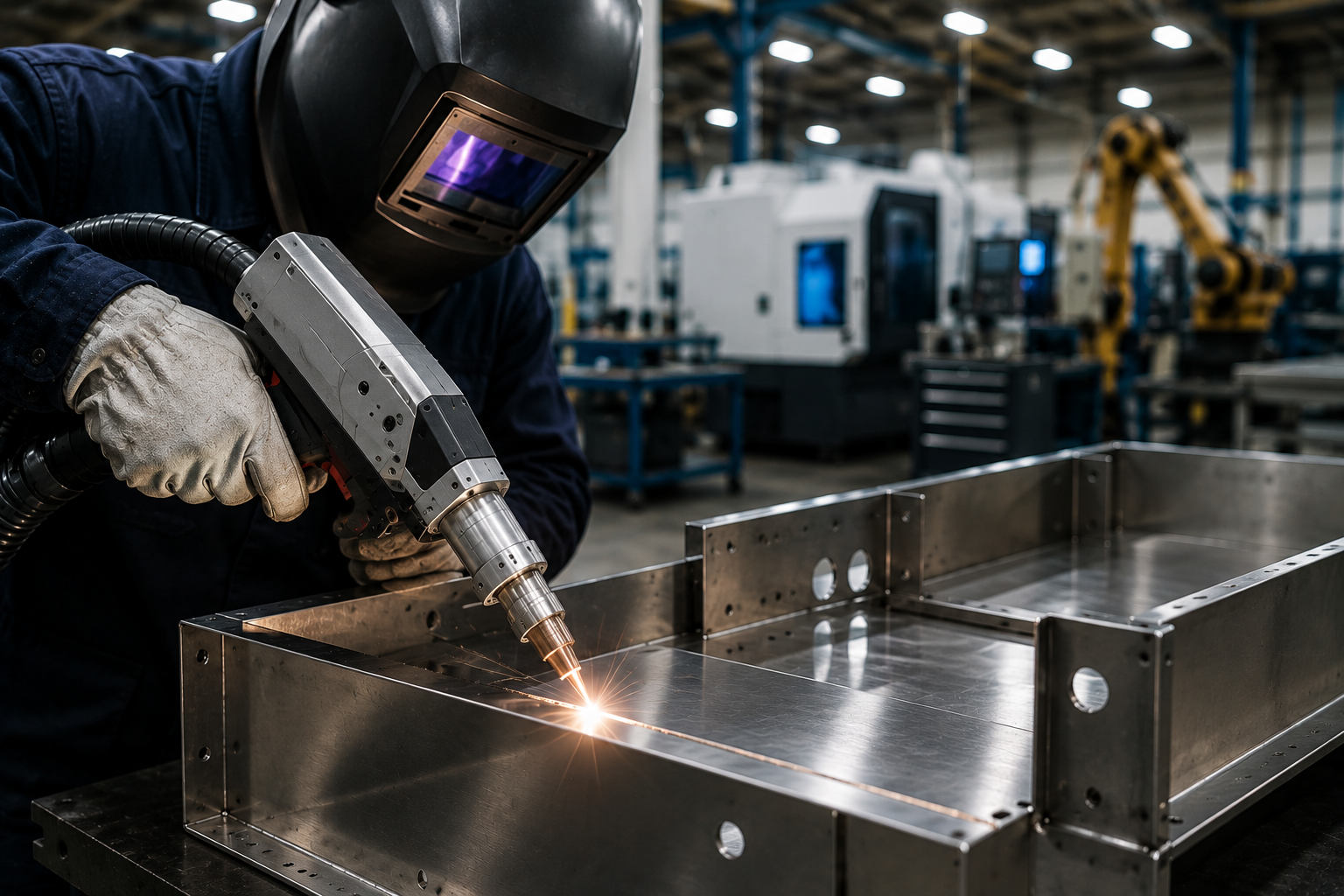
Tracking New Releases: Maxphotonics LightWeld Pro Hits the Market
Maxphotonics just launched the LightWeld Pro 3000W in late May 2026. This updated model features a lighter welding head, faster wobble frequency, and an improved 4-in-1 system (welding, cleaning, cutting, and surface texturing). Early field reports from distributors suggest it's aimed squarely at shops looking to move more MIG and TIG work over to laser without major workflow changes.
Why This New Model Is Driving Replacements
The LightWeld Pro 3000W is built for practical production use on stainless, aluminum, carbon steel, and copper up to 10mm thick.
Productivity Gains With the higher 3000W output and refined beam shaping, users are seeing travel speeds 3–5 times faster than TIG and 2–3 times faster than MIG on most applications. The enhanced wobble mode creates wider, more stable welds in a single pass, reducing the need for multiple runs and heavy grinding. Shops testing the unit report 50–70% shorter cycle times on parts like frames, brackets, and panels.
Reduced Consumables Major cost saver here. The system runs with minimal filler wire (only when needed) and lower shielding gas flow than MIG setups. Protective lenses are the main ongoing item. Early adopters are reporting 65–80% lower consumable costs compared to their previous MIG/TIG operations after just 2–3 months.
Training Considerations The new touchscreen interface includes material-specific presets and real-time feedback, making it easier for operators to dial in parameters. Many users reach solid proficiency in 3–7 days instead of the months required for expert TIG welding. Maxphotonics is bundling a 2-day on-site training package with purchases, focusing on hand technique, speed control, and switching between the four functions.
Current Examples from the Field
- Fabrication: Custom shops are using the LightWeld Pro for stainless and aluminum architectural work. The low heat input keeps large panels flat and cuts down on straightening time.
- Automotive: Repair facilities and EV suppliers are applying it to battery enclosures and body components. The speed and minimal distortion help maintain tight tolerances on coated and high-strength materials.
- Aerospace: MRO operations like the new model's performance on thin brackets and ducting repairs. Consistent penetration on alloys helps reduce scrap rates on high-value parts.
- Contract Manufacturing: Job shops value the quick process switching for handling mixed orders. One contractor noted they can now quote faster turnaround on small batches because they no longer need to switch between different welding machines.
Practical Implementation Challenges
Even with the upgrades, real-world rollout has some hurdles. The system works best with good part fit-up — it doesn't bridge large gaps the way MIG does. Power draw requires stable 3-phase supply, and the chiller needs regular checks. Most shops are starting smart: moving 25–40% of suitable welding jobs to the LightWeld Pro first, tracking labor hours, consumables, and quality metrics before going all-in. Pricing starts around $22,000–$38,000 depending on configuration, making it competitive for mid-sized operations.