
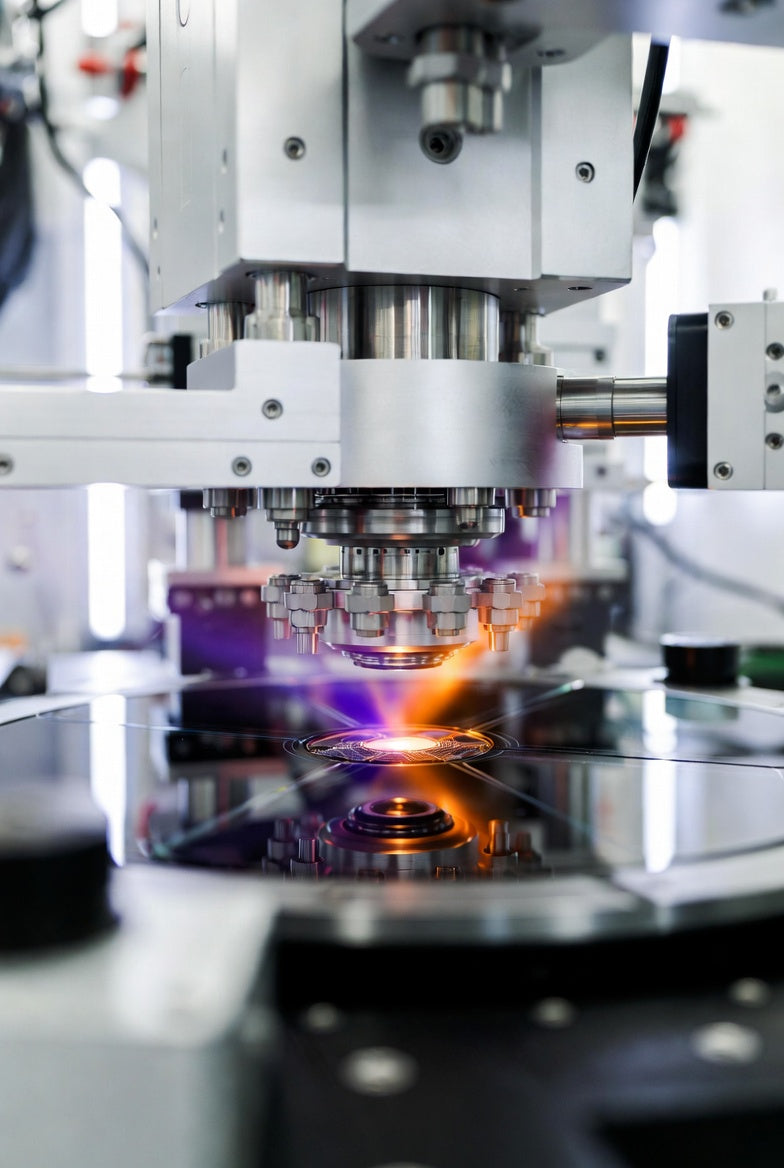
The Laser Wars: How Light Sources Are Shaping the Future of Semiconductor Manufacturing
In the ultra-clean rooms of the world’s most advanced semiconductor fabs, the future of computing isn’t being written by electrons alone — it’s being etched by lasers.
As the global race for smaller, faster, and more powerful chips intensifies, laser technology has emerged as one of the most critical battlegrounds. From the dominant players in Europe to ambitious challengers in the United States and China, companies and governments are pouring billions into next-generation laser systems for Extreme Ultraviolet (EUV) lithography — the essential process that allows manufacturers to print transistors just a few nanometers wide.
xLight’s Ambitious Bet on Free-Electron Lasers
One of the most intriguing developments in recent months is the rise of xLight, a Silicon Valley startup aiming to disrupt the EUV light source market. In July 2025, xLight raised $40 million in funding. By December 2025, the U.S. Department of Commerce committed up to $150 million in CHIPS Act support (including government equity), signaling strong national interest in domestic laser innovation.
xLight is developing a free-electron laser (FEL) approach, drawing on particle accelerator technology from U.S. national labs. Unlike traditional systems that use powerful CO₂ lasers to blast tin droplets and create plasma, FEL technology aims to generate EUV light more directly and efficiently. The company hopes to deliver a working prototype by 2028.
Former Intel CEO Pat Gelsinger, serving as xLight’s executive chairman, has emphasized the strategic importance of reducing reliance on foreign suppliers for this foundational technology.
ASML Maintains Its Lead with High-NA EUV
For now, the undisputed leader remains Dutch company ASML, whose High-NA EUV lithography machines are currently being deployed by Intel, TSMC, and Samsung. These systems rely on extremely powerful CO₂ lasers (developed in partnership with TRUMPF and Coherent) to produce the 13.5 nm wavelength light needed for cutting-edge chip production.
In early 2026, ASML reported significant progress in increasing light source power, promising up to 50% higher throughput in the coming years — critical for meeting exploding demand from AI and high-performance computing.
China’s Aggressive Catch-Up Effort
On the other side of the geopolitical divide, China is making rapid progress in its own EUV programs. Huawei and SMIC, along with state-backed research institutes, are developing alternative approaches including Laser-Induced Discharge Plasma (LDP) systems. A prototype EUV machine was reportedly completed in Shenzhen in 2025, with trial production targeted for late 2025 or 2026.
While experts believe China still trails in high-volume manufacturing capability, the pace of advancement has surprised many in the industry and accelerated efforts by the U.S. and its allies to protect critical technologies.
Why Lasers Matter So Much
Modern EUV lithography is an extraordinary engineering feat. A high-power laser strikes tin droplets 50,000 times per second, creating a plasma that emits EUV light. This light is then reflected through a series of ultra-precise mirrors (in a near-vacuum) onto a silicon wafer coated with special photoresist. The entire process must be incredibly stable and powerful to pattern billions of transistors on each chip.
Improvements in laser efficiency, power, and stability directly translate into faster production, lower costs, and the ability to continue shrinking chip features — the heart of Moore’s Law.
The Bigger Picture
The laser race in semiconductors is about far more than just better chips. It represents a critical front in the global technology competition between the U.S., Europe, and China. Control over advanced lithography directly impacts leadership in AI, 5G/6G, quantum computing, and national security.
As demand for AI accelerators continues to surge, the companies and nations that master next-generation laser light sources will hold a decisive advantage in the semiconductor supply chain for years to come.