
UK Metal Finishing Pioneer Adopts Bulk Laser Cleaning in Major Sustainability Leap
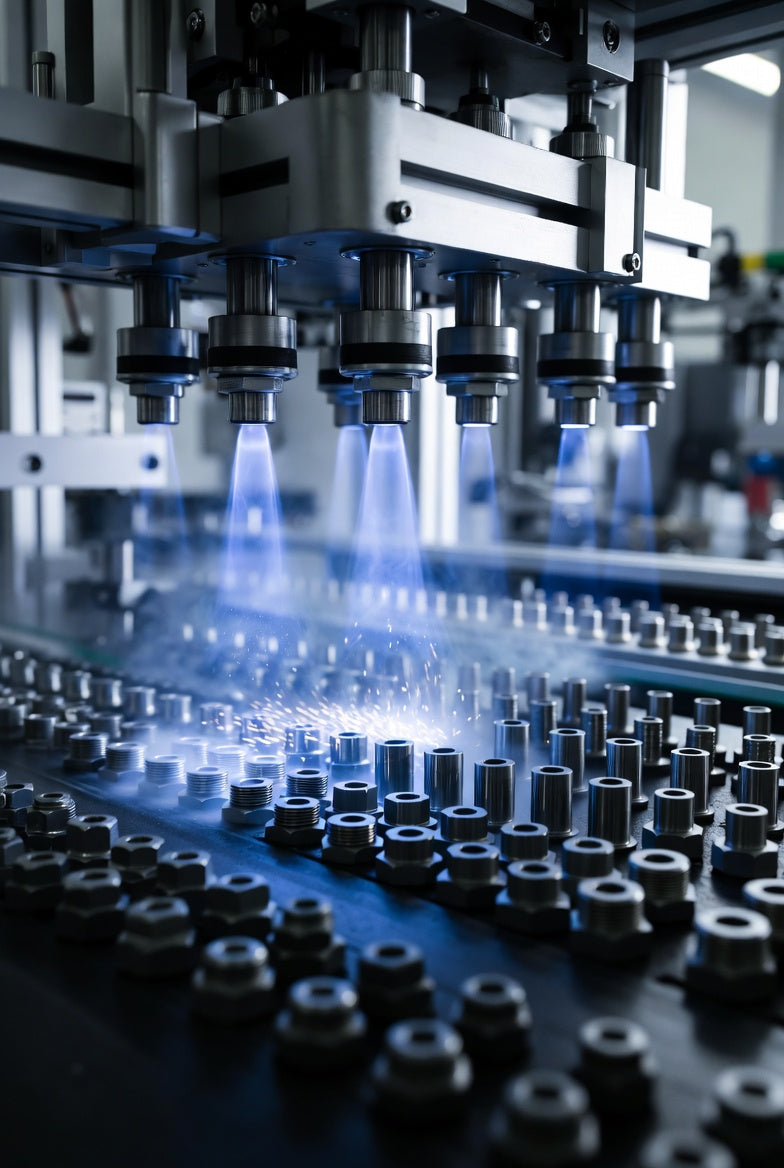
In a landmark move for the UK manufacturing sector, Wolverhampton Electro Plating (WEP), part of the Anochrome Group, has installed Britain’s first industrial bulk laser cleaning and pre-treatment system. The deployment of the LAMA machine from German specialist SLCR Lasertechnik marks a significant shift away from traditional chemical, water-based, and shotblasting methods in metal finishing.
The system, developed over a two-year collaboration, is designed specifically for cleaning nuts, bolts, and other small-to-medium metal parts in bulk before applying zinc flake dip-spin coatings. It uses repetitive laser pulses to vaporize contaminants and coatings without damaging the underlying substrate, delivering consistent results across mixed batches.
Why This Matters: Environmental and Operational Benefits
Conventional pre-treatment processes rely heavily on water, aggressive chemicals, and abrasive media, generating significant waste, high energy consumption, and environmental compliance costs. Laser cleaning eliminates these issues:
- Zero chemicals or consumables — No hazardous waste or secondary pollution.
- Lower energy use — Dramatic reduction compared to multi-stage chemical/shotblast lines.
- Faster, consistent processing — Streamlines preparation into a single automated step while maintaining high quality for coating adhesion.
- Substrate preservation — Precise removal of contaminants without altering the base material.
Olav Schulz, Managing Director of SLCR Lasertechnik, noted that WEP is the first coatings business in the UK to adopt lasers for bulk part preparation, calling it “a significant step forward for the industry.” Final testing is underway at WEP’s Wolverhampton facility, with full production integration planned for later in 2026.
Denis Rainbird, General Manager at WEP, highlighted the business case: “This game-changing technology removes huge amounts of water, chemistry, and power... improving our carbon footprint, lowering costs, and speeding up turnaround times.”
Broader Context: Laser Cleaning’s Industrial Momentum
This UK milestone reflects accelerating global adoption of laser cleaning as a green alternative across sectors. The technology uses focused laser energy to ablate rust, paint, oxides, grease, and other contaminants via photothermal, photochemical, or photomechanical effects, with minimal heat input to the substrate.
Recent developments include:
- Trucking and Heavy Vehicles — Laser Photonics’ CleanTech systems help remanufacturing shops meet TMC RP 374 guidelines for Diesel Particulate Filter (DPF) and Diesel Oxidation Catalyst (DOC) cleaning, offering eco-friendly exterior prep.
- Precision Applications — Bold Laser’s new UV precision cleaning system (March 2026) targets thin-film removal and sensitive components in medical devices and electronics with machine vision integration.
- Defense and Aerospace — U.S. Army’s Yuma Test Center and RAAF (Australia) deployments demonstrate rapid paint/corrosion removal on gauges and vintage aircraft, slashing processing time from months/weeks to days/hours while protecting heritage components.
- Specialized Uses — Anilox roller cleaning in printing, nuclear/power plant maintenance, and cultural heritage restoration.
Market analysts project strong growth for laser cleaning through the late 2020s, driven by environmental regulations, automation trends (including robotics and AI parameter optimization), and demand in EV manufacturing, shipbuilding, and infrastructure.
Looking Ahead
WEP’s adoption signals maturing industrial readiness for bulk applications, previously a challenge for laser systems optimized for large surfaces or precision work. As more manufacturers seek sustainable, cost-effective alternatives to legacy processes, laser cleaning is transitioning from niche innovation to standard practice—delivering cleaner operations, safer workplaces, and measurable ESG gains.
This development in the West Midlands could inspire wider uptake across Europe’s metal finishing and automotive supply chains, reinforcing laser technology’s role in the green manufacturing revolution.