Laser Safety Industries Provides Guidance on Selecting the Right Laser Safety Eyewear for Industrial Applications at IMTS 2026
Helping Manufacturers Understand Laser Safety Eyewear Selection Through Application-Based Guidance
Laser safety eyewear is one of the most recognizable elements of a laser safety program—but selecting the appropriate eyewear requires more than simply choosing the highest optical density rating available.
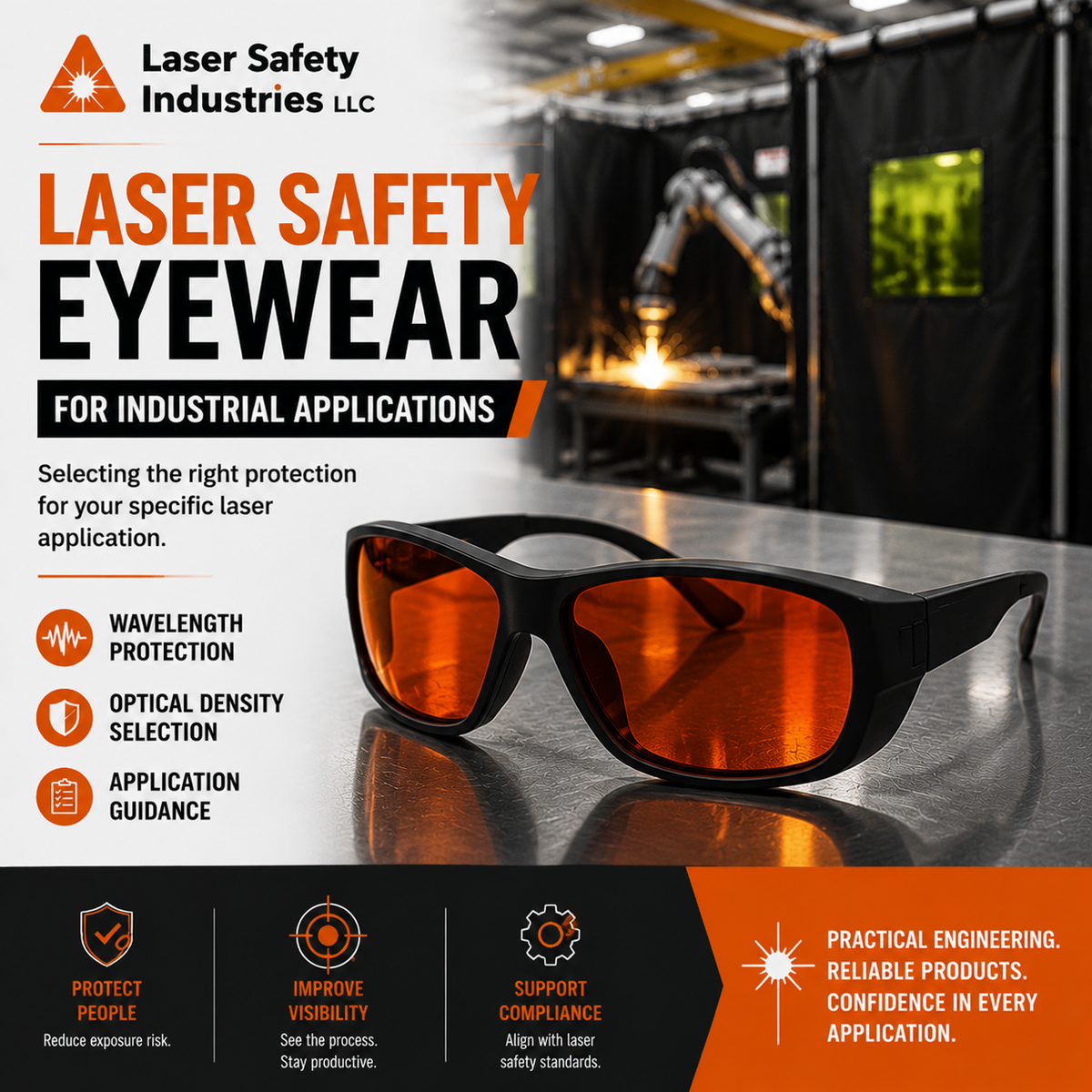
At IMTS 2026, Laser Safety Industries (LSI) will highlight the importance of selecting laser safety eyewear based on the specific laser application, operating conditions, and required protection.
Laser Safety Eyewear Selection Starts With Understanding the Laser
Different laser systems create different hazards.
The appropriate eyewear depends on factors including:
- Laser wavelength
- Laser power or energy level
- Operating environment
- Exposure conditions
- Required visibility
- Duration of potential exposure
A lens designed for one wavelength may not provide appropriate protection for another. For this reason, selecting eyewear should begin with understanding the laser system and the potential hazards involved.
Optical Density Is Only One Part of the Equation
Optical density (OD) is an important specification for laser safety eyewear, but it is not the only consideration.
A practical eyewear selection process should also consider:
Wavelength Coverage
Laser eyewear must be designed for the wavelength being used.
Different laser technologies operate at different wavelengths, including:
- Fiber lasers
- CO₂ lasers
- Diode lasers
- Nd:YAG lasers
- Visible wavelength lasers
Visibility Requirements
While protection is the primary purpose of laser eyewear, visibility is also an important consideration.
Manufacturers must balance:
- Required protection level
- Ability to see the work area
- Color recognition
- Operator comfort
Poor visibility can create operational challenges and may encourage improper eyewear practices.
Application Requirements
The appropriate eyewear may differ depending on the application.
For example, requirements for:
- Laser welding
- Laser cleaning
- Alignment procedures
- Research applications
- Automated systems
may vary significantly.
Eyewear as Part of a Complete Laser Safety Strategy
Laser safety eyewear is an important layer of protection, but it is typically one part of a broader laser safety approach.
Depending on the application, manufacturers may also consider:
- Laser safety barriers
- Hardwall containment systems
- Viewing windows
- Controlled access areas
- Administrative controls
- Training
The appropriate combination of controls depends on the specific application and hazard evaluation.
Supporting Manufacturers With Practical Laser Safety Guidance
Laser Safety Industries works with manufacturers to better understand their laser safety requirements and identify appropriate solutions.
Through engineering reviews, technical articles, and educational resources, LSI helps customers evaluate laser safety products based on their actual operating environment.
LSI provides laser safety solutions including:
- Laser safety eyewear
- Laser safety barriers
- Hardwall containment systems
- Viewing windows
- Portable laser containment solutions
Visit Laser Safety Industries at IMTS 2026
Attendees are invited to visit Laser Safety Industries at Booth 135236 during IMTS 2026 to discuss their laser applications and learn more about selecting appropriate laser safety solutions.
Whether implementing a new laser process or reviewing an existing safety program, the LSI team can help manufacturers better understand their options.
Visit Laser Safety Industries at Booth 135236 to discuss practical laser safety solutions for your application.